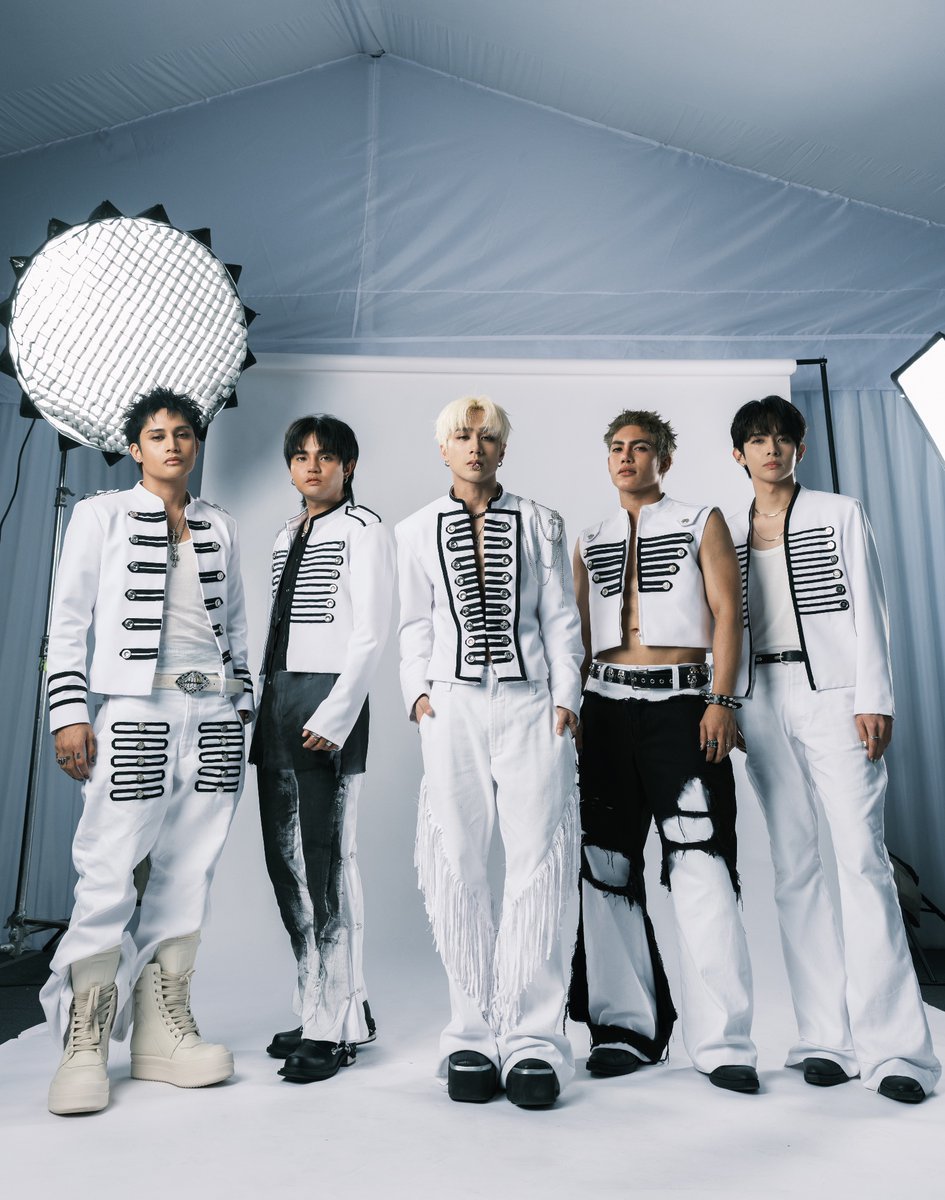
A first solo showcase is often presented as a declaration of arrival—a chance for an artist to command the stage and establish an identity outside the group that introduced him.
At “the Middle: A Prelude,” Pablo treated that milestone as a beginning rather than a final statement.
Held on July 17 at the Crossroad Center in Quezon City, the sold-out Pablo “the Middle” showcase introduced his next solo chapter through “USAD,” an intimate circular stage, and a set that moved between internal conflict, faith, and perseverance. Even its subtitle, “A Prelude,” suggested that the evening was designed to introduce something still taking shape.
The meaning of being in the middle
Pablo described “the Middle” as “the space between breaking and healing.”
It represents the stage where effort has already begun, but its results remain difficult to measure. The struggle has not disappeared, yet the person experiencing it is no longer standing exactly where they started.
For Pablo, the idea was connected to the more personal direction he wanted to pursue through his solo work. He spoke about being honest across his songs, journal entries, videos, and other forms of expression while allowing those ideas to return to the same creative foundation: music. (Billboard Philippines)
That openness carries particular weight for an artist frequently viewed through his responsibilities as SB19’s leader.
His individual work does not necessarily reveal emotions absent from SB19’s music. Instead, it gives doubt, exhaustion, and self-reflection more room to remain personal, without needing to represent the larger story of a five-member group.
“USAD” and the frustration of invisible progress
The emotional center of the showcase was “USAD,” released on the same day as the event.
Pablo composed and produced the track, while Emil Dela Rosa handled its mixing and mastering. Musically, it combines smooth R&B with funk-influenced rhythms, synth-led production, and gospel choir harmonies. Pablo described it as the first single from his “middle child,” marking the beginning of a new direction following his 2024 solo albums, ALON and LAON. (Billboard Philippines)
“USAD” grew from a period when Pablo remained constantly busy but struggled to recognize whether anything was genuinely progressing.
That experience gives the track a more grounded emotional foundation than a conventional motivational anthem. Its reassurance can be heard as coming from inside the struggle rather than after every difficulty has already been overcome.
The song acknowledges the discouragement of working, waiting, and questioning whether any of it is leading somewhere. At the same time, its rhythm creates a sense of forward motion, while the gospel-backed lift brings hope into music still rooted in doubt.
Progress is not presented as one dramatic breakthrough. It becomes the quieter decision to continue when the result cannot yet be seen.
That makes “USAD” an effective beginning for Pablo’s new chapter. It does not abandon the emotional weight associated with much of his earlier solo work. It introduces movement alongside it.
A stage built for emotional closeness
The showcase’s staging made that tension visible.
Pablo performed on a circular platform, surrounded closely by the audience and accompanied by a live band and choir. Reports from the event also noted that he became emotional during several performances.
The circular setup created closeness without removing the focus from him. There was little physical distance between Pablo and the people watching, making his voice, expressions, and emotional responses part of the experience rather than details hidden behind an elaborate production.
That intimacy suited the material.
Pablo did not rely on a louder or emotionally detached persona to command the showcase. His ability to hold the room came partly from allowing the audience to witness the tension behind the songs.
The stage placed him alone at the center, but it did not require him to appear invulnerable.
A setlist that did not rush toward resolution
The reported setlist brought together Pablo’s earlier solo releases, including “Tambol (Ibang Planeta),” “Puyat,” “Drowning in the Water,” “Kumunoy,” “The Boy Who Cried Wolf,” and “Micha!”
He also performed SB19’s “Nyebe” and interpretations of Hillsong Worship’s “What a Beautiful Name” and Paramore’s “Last Hope.”
Taken together, the selections moved between Pablo’s darker, more introspective material and songs associated with endurance and faith.
Much of his previous solo work examines what it feels like to remain inside fear, exhaustion, isolation, or internal conflict. “USAD” did not erase those experiences. It added the possibility that forward movement may already be happening beneath them.
Within the wider theme of the evening, “What a Beautiful Name” and “Last Hope” could be read as moments of faith and endurance. They helped prevent the set from becoming a simple journey in which pain conveniently disappears before the final song.
Instead, struggle and hope remained present together. “USAD” felt like the next point in an ongoing story rather than a sudden change in Pablo’s artistic personality.
A solo chapter that remains connected
Pablo’s fellow SB19 members and XONARA were among those who attended the showcase. Their presence gave the evening a sense of continuity with the creative community surrounding SB19 and 1Z Entertainment rather than making the milestone feel isolated from it.
Pablo does not need to reject his place in SB19 to clarify his individual voice.
His solo career can give him space to explore sounds and experiences that belong specifically to him while remaining connected to the group and company he helped build. Independence, in this case, is not defined only by distance. It can also be found through greater clarity about what he wants to express when the stage is his alone.
What the prelude leaves unfinished
Calling the event “A Prelude” left a deliberate question unanswered: what will Pablo’s “middle child” eventually become?
“USAD” offers the first indication—a more open emotional perspective carried by R&B, funk, synths, and gospel influence—but the complete sound and visual identity of the era are still unfolding.
“The Middle” did not define the finished shape of Pablo’s solo identity. It introduced its central tension: the desire to continue moving even when progress remains difficult to see.
Through “USAD,” the circular stage, and a setlist that did not rush from pain toward resolution, Pablo presented growth as something happening in real time.
That may be why “A Prelude” was the right description.
The showcase did not provide every answer. It made the next chapter worth following.