For years, fans called BINI the Nation’s Girl Group.
Now, that title feels less like a fandom label and more like a national role.
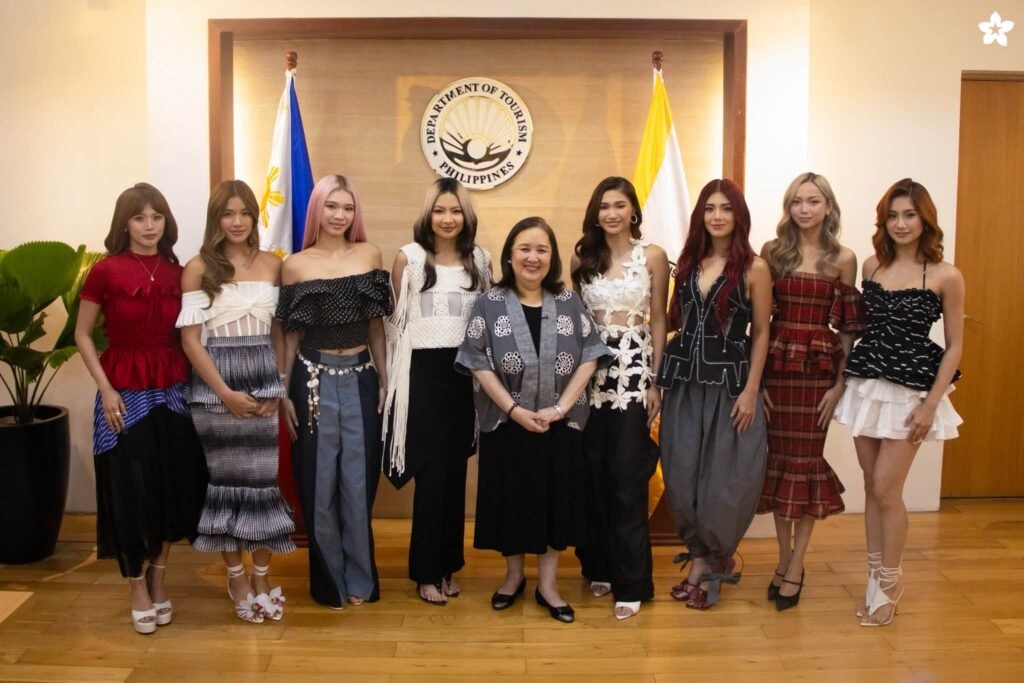
In separate official posts, BINI and the Department of Tourism – Philippines confirmed that the Nation’s Girl Group has been named one of the country’s newest tourism ambassadors, marking another major step in BINI’s role as a cultural representative for the Philippines.
At first glance, it may look like another major endorsement.
But this moment feels bigger than that.
BINI’s tourism ambassador role matters because it turns the Nation’s Girl Group title into something larger: a bridge between P-pop, Filipino pride, and how the Philippines wants to be seen.
BINI Fits This Role Naturally
Some ambassador roles feel like simple brand partnerships.
This one feels easy to understand.
BINI has always carried the kind of image that fits Philippine tourism: bright, youthful, colorful, approachable, and proudly Filipino. Their music often feels connected to movement, joy, friendship, summer, and the everyday emotions of young Filipinos.
Before BINI was formally tied to tourism, “Pantropiko” had already made them feel like a soundtrack to the Filipino summer.
That is why this role does not feel random.
BINI’s visuals, performances, and public image already have a travel-coded energy. They feel fresh without feeling distant. They can speak to young fans online, but they can also appeal to families, casual listeners, and Filipinos who simply want to see homegrown talent being celebrated.
Tourism is not only about showing beaches, mountains, food, or festivals.
It is also about creating a feeling.
People remember a place through warmth, color, sound, stories, and emotion. BINI’s strength is that they already carry many of those qualities as a group.
They do not just promote the Philippines as a destination.
They make the idea of the Philippines feel alive, young, and shareable.
For Blooms, This Feels Like Validation
For Blooms, this announcement is not just another headline.
It feels like recognition.
Fans saw BINI’s growth before every major milestone arrived. They streamed the songs, filled venues, shared fancams, created edits, defended the group, explained inside jokes, and helped turn BINI into one of the most visible Filipino acts of their generation.
Fandom did not officially appoint BINI to represent the Philippines.
But fandom helped make BINI impossible to ignore.
That is why the moment belongs to fan culture too.
P-pop fandom is often reduced to online noise, trends, and intense reactions. But moments like this show the deeper side of fandom. Fans help build visibility. They help keep artists in public conversation. They turn songs into shared memories and milestones into national moments.
For Blooms, BINI being chosen as tourism ambassadors is not just about a title. It is about seeing years of support, belief, and pride reflected back by a national institution.
P-pop Is Becoming Part Of How The Philippines Tells Its Story
This announcement also matters beyond BINI.
A country is not only discovered through airports, travel ads, and official campaigns. Sometimes, people discover it first through a song, a performance, a fancam, or a group they fall in love with online.
That is where P-pop becomes powerful.
When P-pop artists perform internationally, they bring more than choreography and vocals. They bring language, humor, visuals, fashion, fan culture, and Filipino identity.
BINI’s recent global momentum makes this tourism role even more meaningful. Billboard Philippines reported that BINI made history as the first homegrown all-Filipino act to perform at Coachella 2026. The group was also recognized with the Global Force Award at Billboard Women in Music.
Those milestones already placed BINI in a global conversation.
Now, their tourism ambassador role connects that visibility to the country itself.
BINI is not only being recognized as a successful P-pop group. They are being trusted to help carry an image of the Philippines that is modern, joyful, talented, and globally aware.
This Can Work — But Only If It Is More Than A Photo-Op
Of course, the real test is how this role will be used.
A tourism ambassador title can easily become just another photo-op if the campaign does not understand the artist, the fandom, or the culture behind the music.
BINI’s value is not only in their popularity. It is in the feeling they bring. It is in the way they connect music, movement, youth culture, and Filipino pride.
If the campaign uses them only as familiar faces, it may miss the bigger opportunity.
But if done well, BINI’s role could show how P-pop can make Philippine tourism feel more connected to the younger generation.
It can make local travel feel current.
It can make Filipino pride feel exciting.
It can make tourism feel less like a formal campaign and more like a shared cultural moment.
This Is Also About Rediscovering The Philippines
The timing also fits the Department of Tourism’s “Discover More to Love” campaign, which encourages people to explore more of the Philippines. According to the Philippine Information Agency, the campaign includes thousands of travel deals and runs from July to November 2026.
In that context, BINI is not just being used to promote destinations.
They are being used to make local pride feel current, youthful, and shareable.
That makes sense because BINI’s rise has always been rooted in Filipino audiences, Filipino online culture, Filipino humor, and the excitement of seeing a homegrown girl group break through.
BINI can invite people to visit the Philippines.
But they can also remind Filipinos why the country is worth celebrating.
Who Comes Next?
The more interesting question now is not only why BINI was chosen.
It is who comes next.
Billboard Philippines also reported that the Department of Tourism is expected to announce another P-pop group as tourism ambassadors soon.
That detail matters.
If another P-pop group joins BINI, this becomes more than one group’s achievement. It becomes a sign that P-pop itself is being recognized as part of the country’s cultural identity.
That could encourage more institutions, brands, tourism campaigns, and media platforms to see P-pop artists not only as performers, but as cultural representatives.
And that is important because P-pop has always carried more than sound.
It carries visuals, language, choreography, fashion, storytelling, community, and pride. When those elements are used to promote the Philippines, P-pop becomes part of how the country introduces itself to the world.
The Nation’s Girl Group Title Feels Bigger Now
BINI becoming tourism ambassadors does not mean P-pop has no more challenges.
The industry still needs stronger support systems, better opportunities for rising groups, wider coverage, and more sustainable ways for artists to grow. One major appointment cannot solve everything.
But it does show progress.
It shows that P-pop artists can be seen not only as entertainers, but as representatives of Filipino identity. It shows that Filipino music can be used not only to perform, but to invite, connect, and inspire.
That may be the real milestone here: not just that BINI was chosen, but that P-pop is now being trusted to help tell the Filipino story.
For years, fans called BINI the Nation’s Girl Group.
Now, the country is starting to treat that title seriously.
What do you think, Blooms and P-pop fans? Which Philippine destination would you love to see BINI feature first — and which P-pop group do you think should be announced next as tourism ambassadors?